
SiliconCloud Integration Example
Configure SiliconCloud LLM, embedding, and rerank models in a self-hosted FastGPT deployment.
SiliconCloud provides open-source model inference APIs covering language, embedding, reranking, text-to-speech (TTS), and speech-to-text (STT) models for FastGPT.
Before reading this guide, make sure you've read the Model Configuration Guide.
1. Register an Account
- Register a SiliconCloud account
- Go to the console and get your API key: https://cloud.siliconflow.cn/account/ak
2. Add Models
The system includes a few SiliconCloud models by default for quick testing. If you need additional models, you can add them manually.
In Admin → System Resources → System Models, enable the required language and vision models (such as Qwen2.5-72B and Qwen2-VL-72B), embedding model (bge-m3), rerank model (bge-reranker-v2-m3), and speech models.

3. Add a Model provider
On the Model providers page, add a new SiliconCloud provider and select the models you just added.
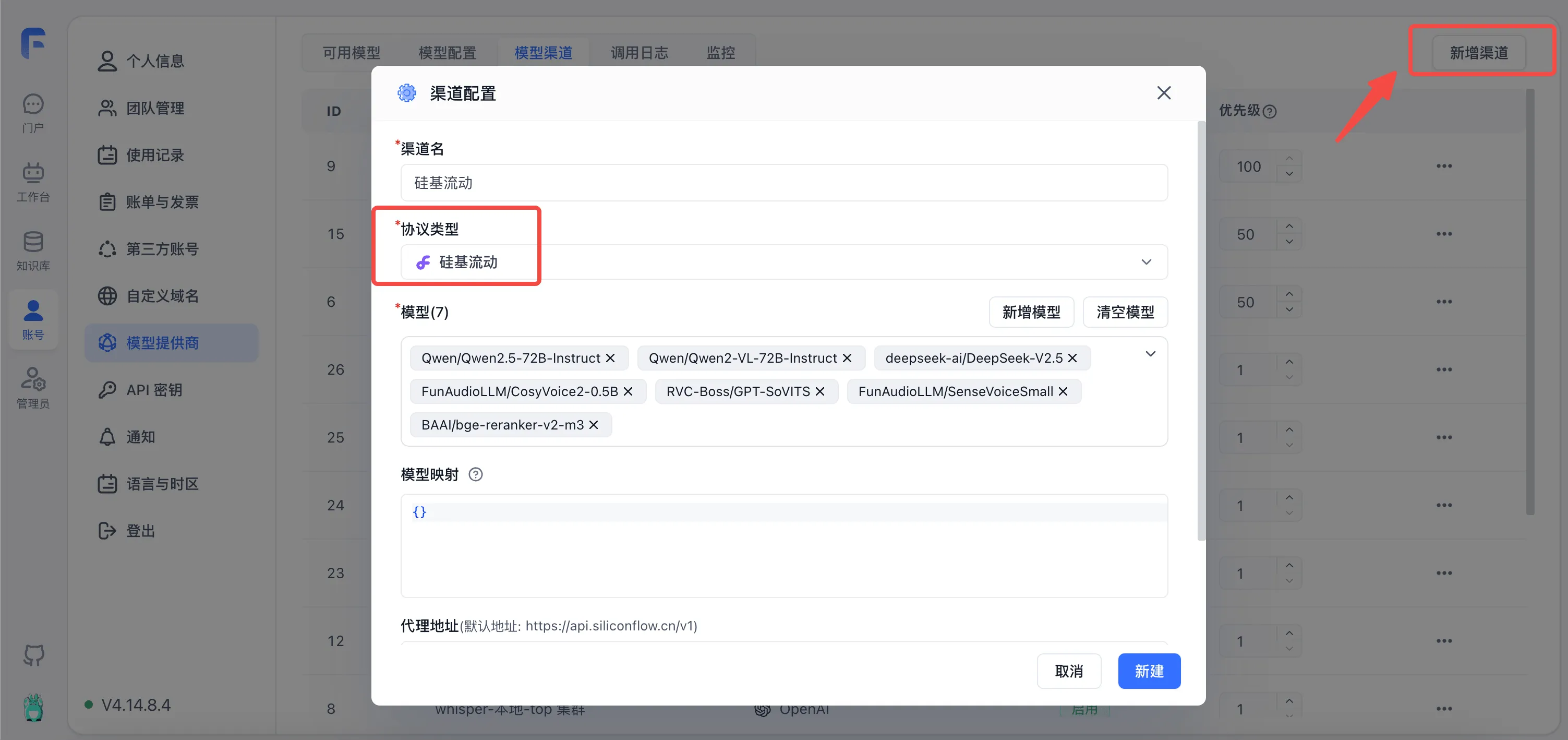
4. Test Models
First, verify that all SiliconCloud models are running properly.
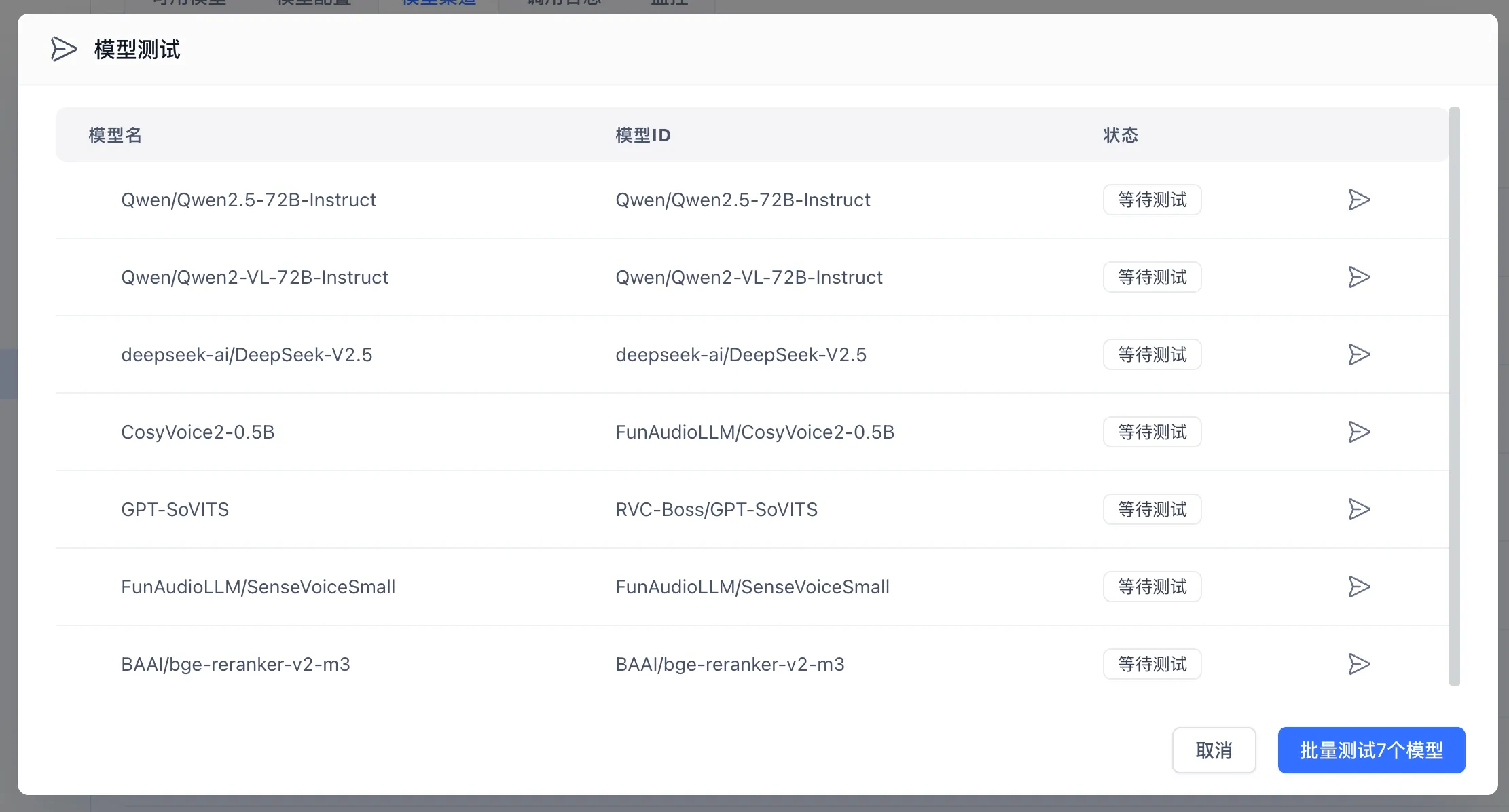
5. Test in an App
Test Chat and Image Recognition
Create a simple app, select the corresponding model, enable image upload, and test:
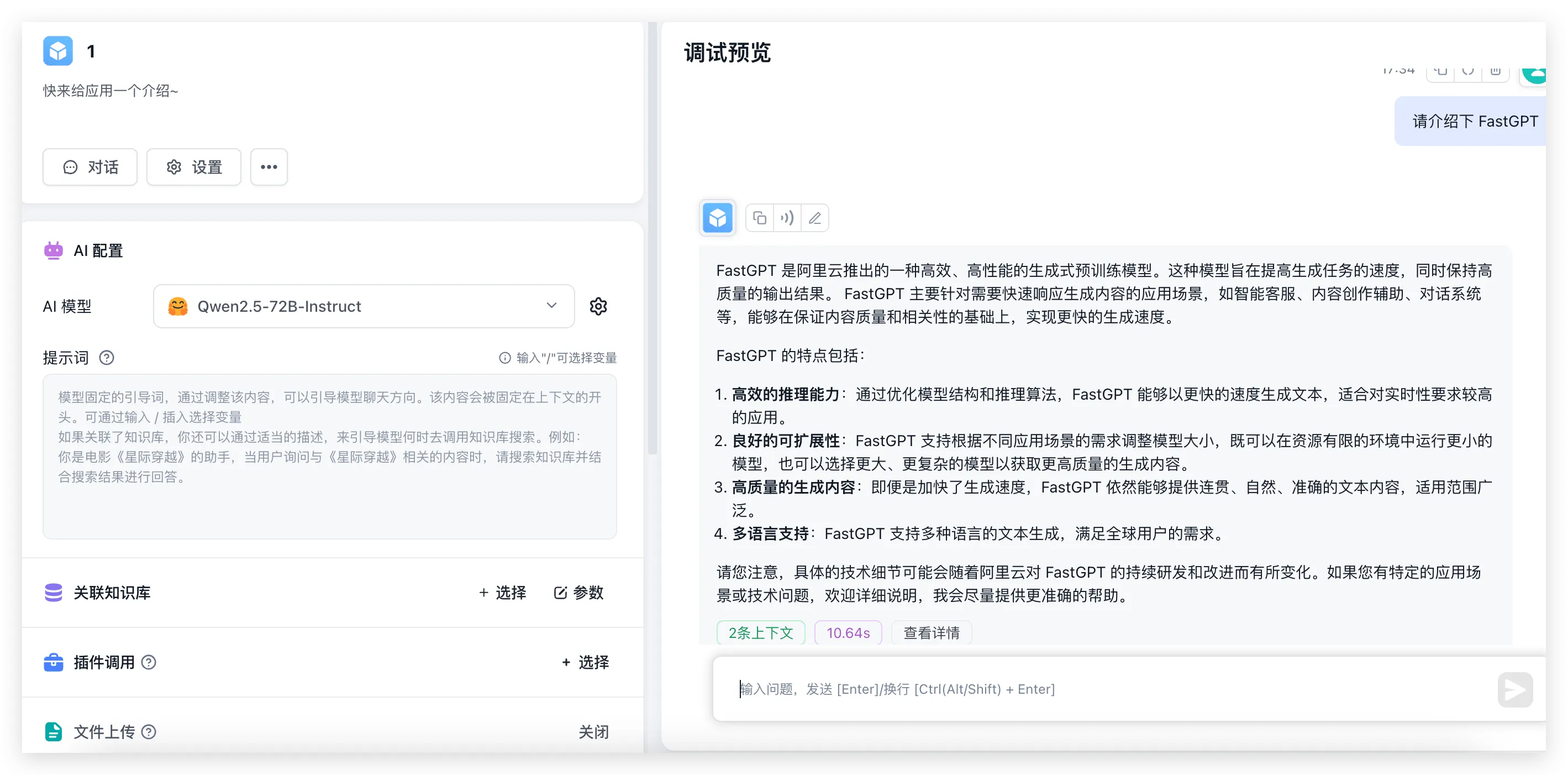 | 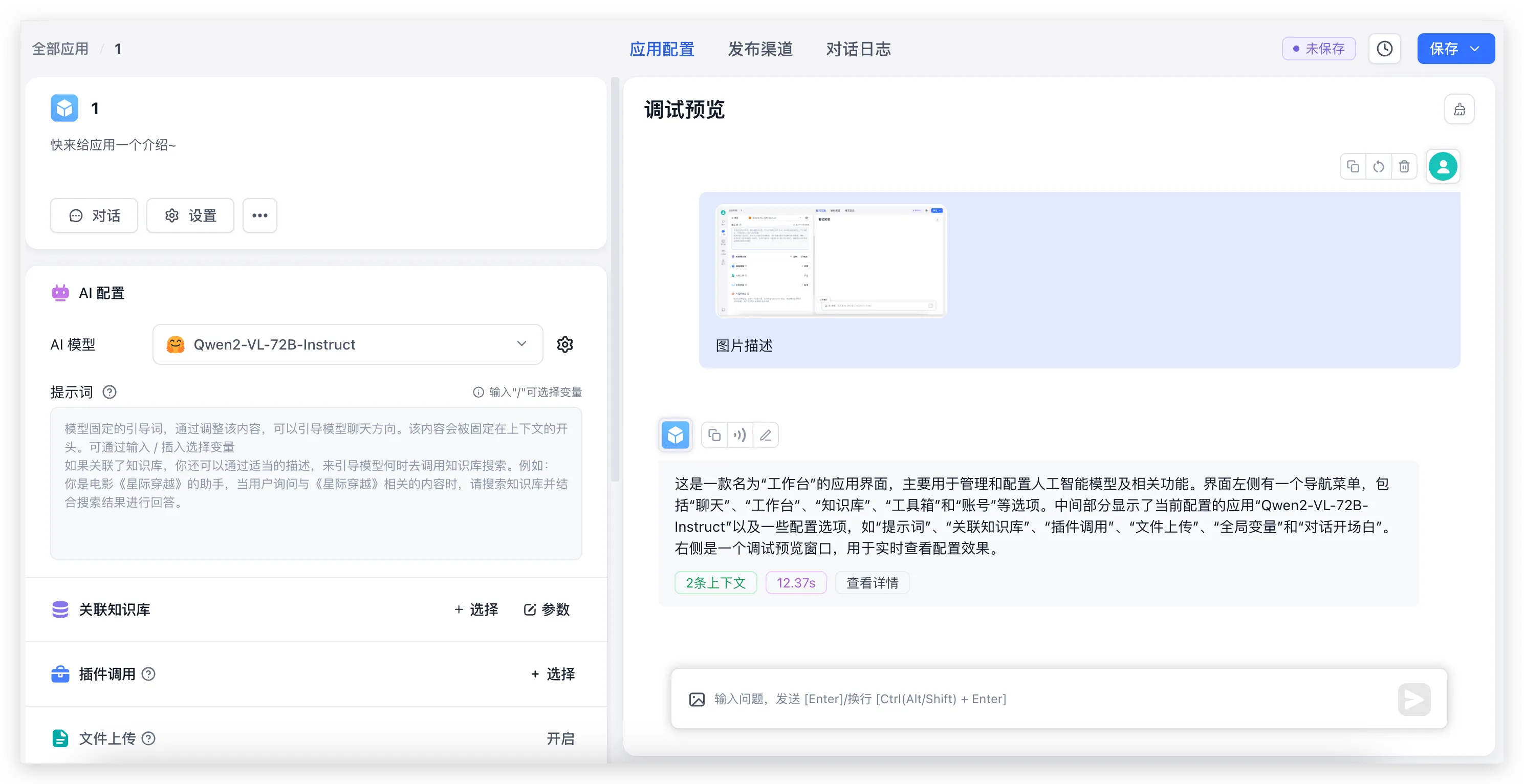 |
Test Dataset Import and Q&A
Create a Dataset (since only one embedding model is configured, the embedding model selector won't appear on the page):
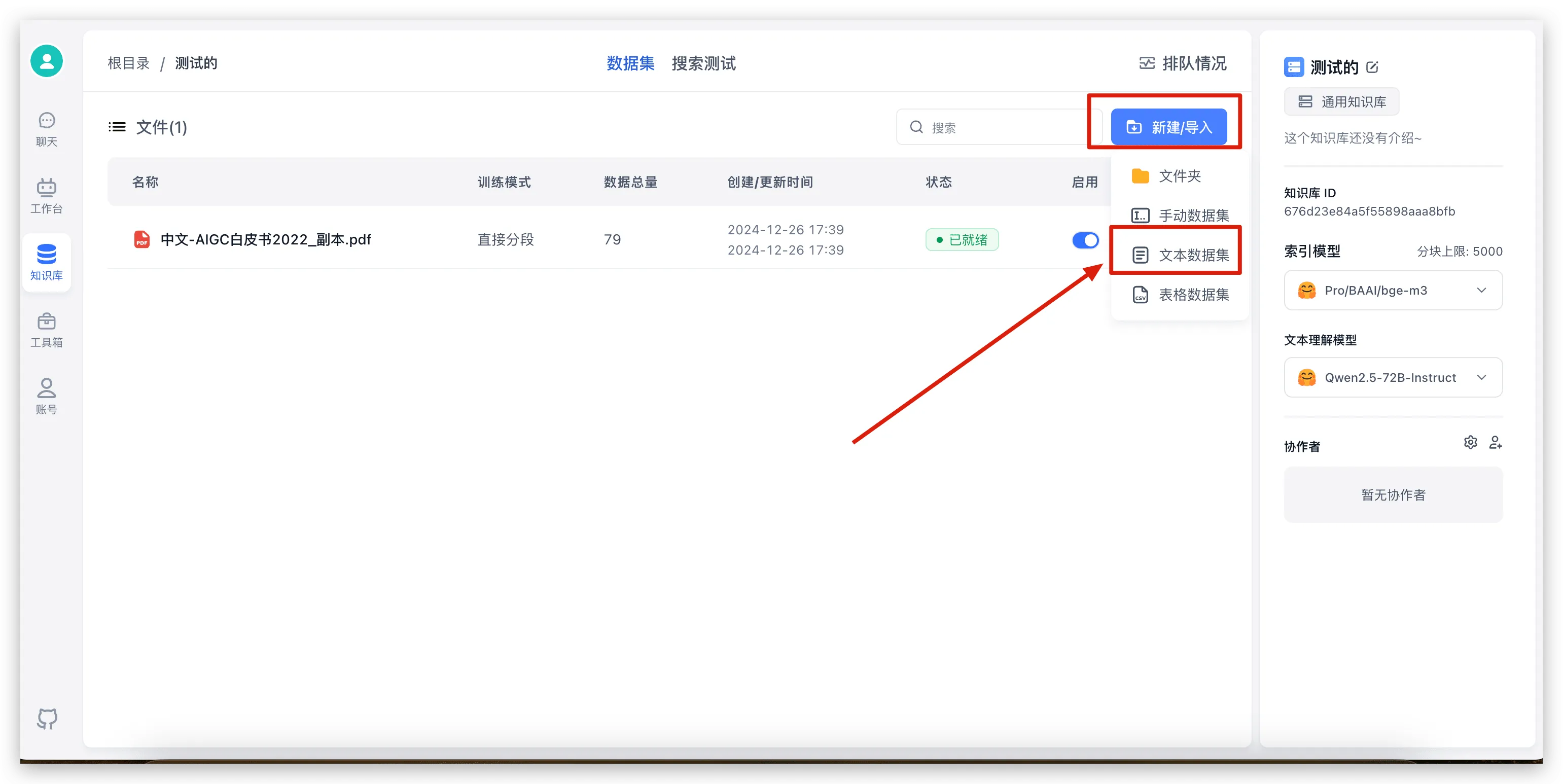 |  |
Import a local file and complete the chunking and indexing steps, then test Dataset Q&A.
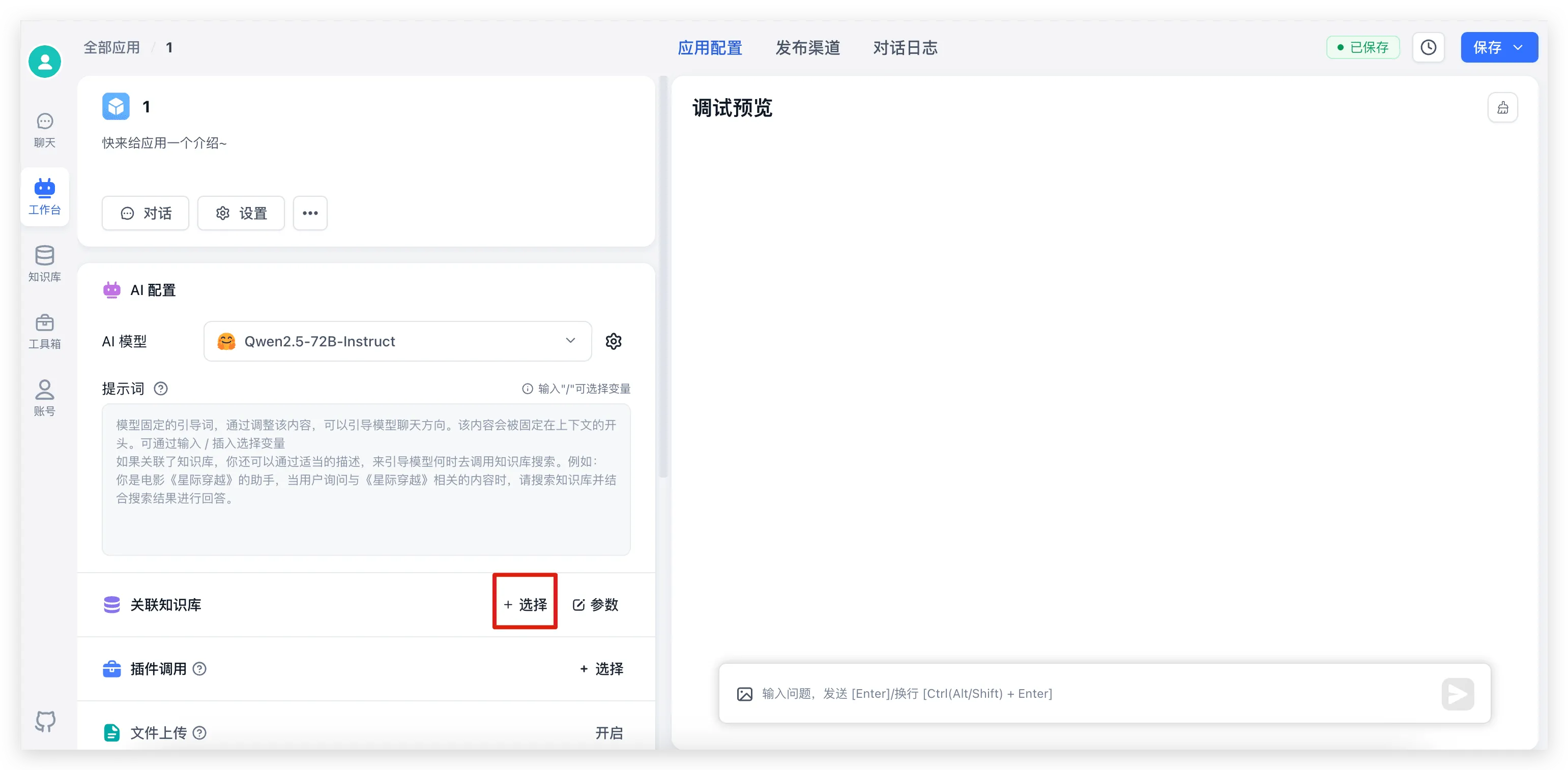
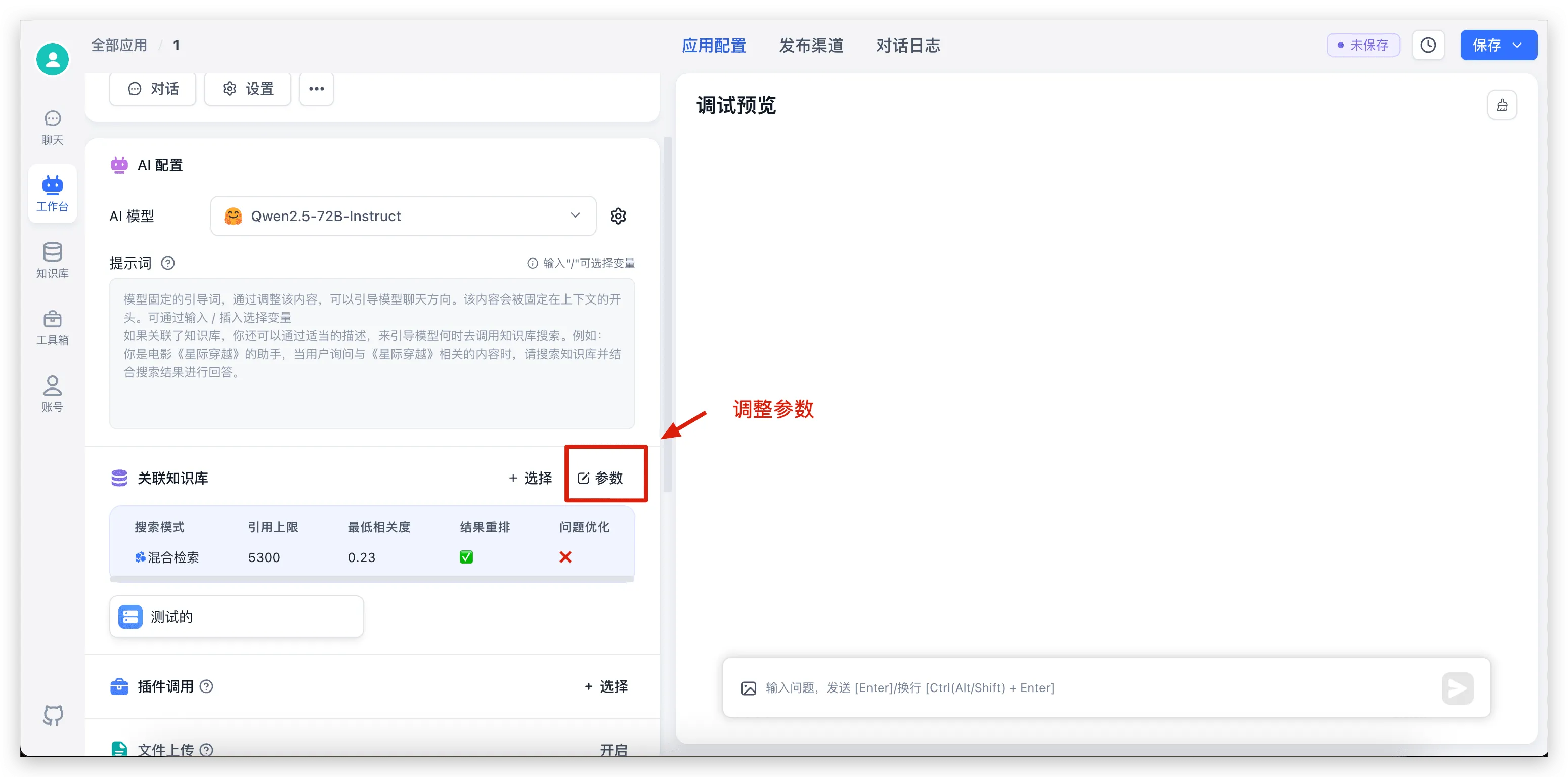
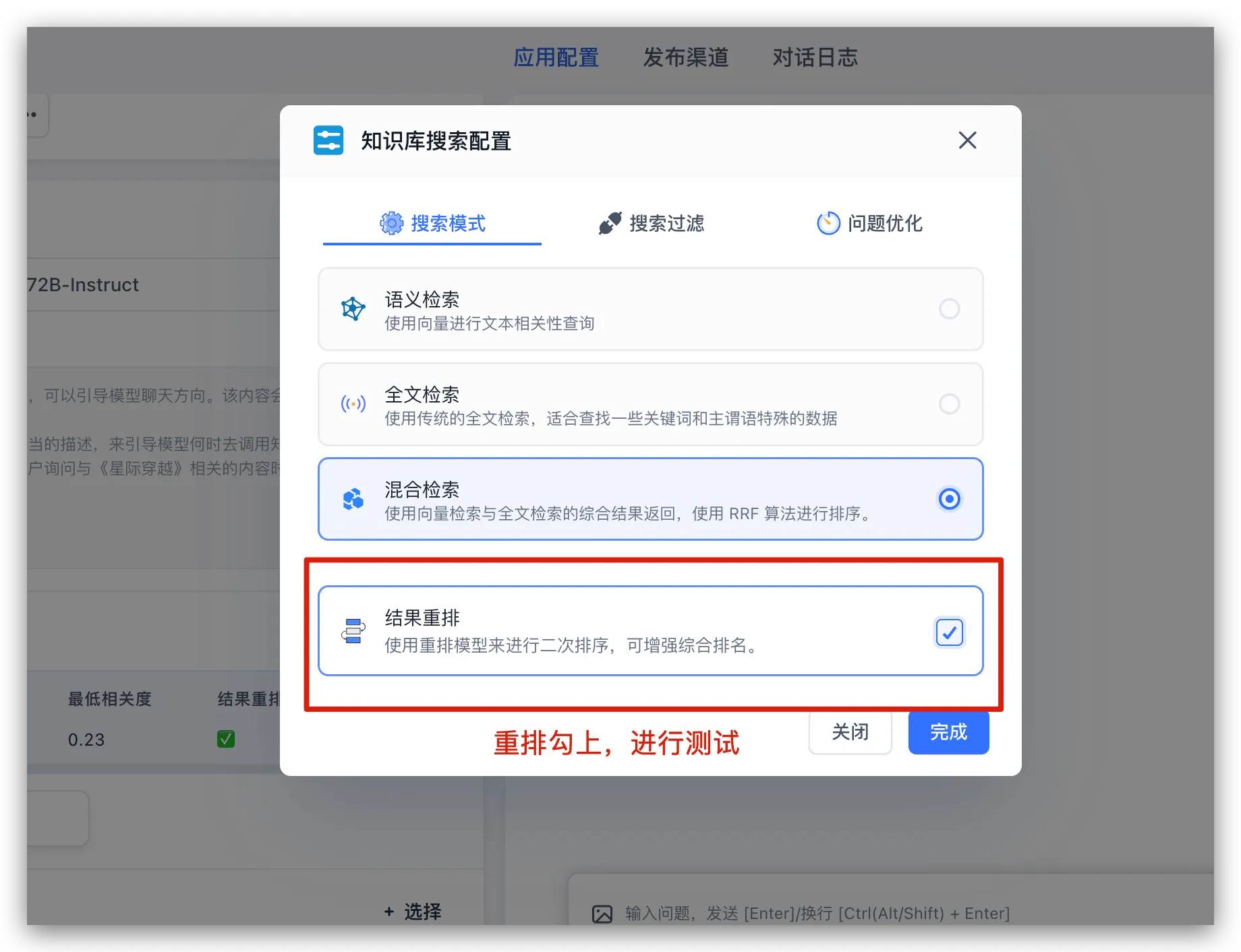
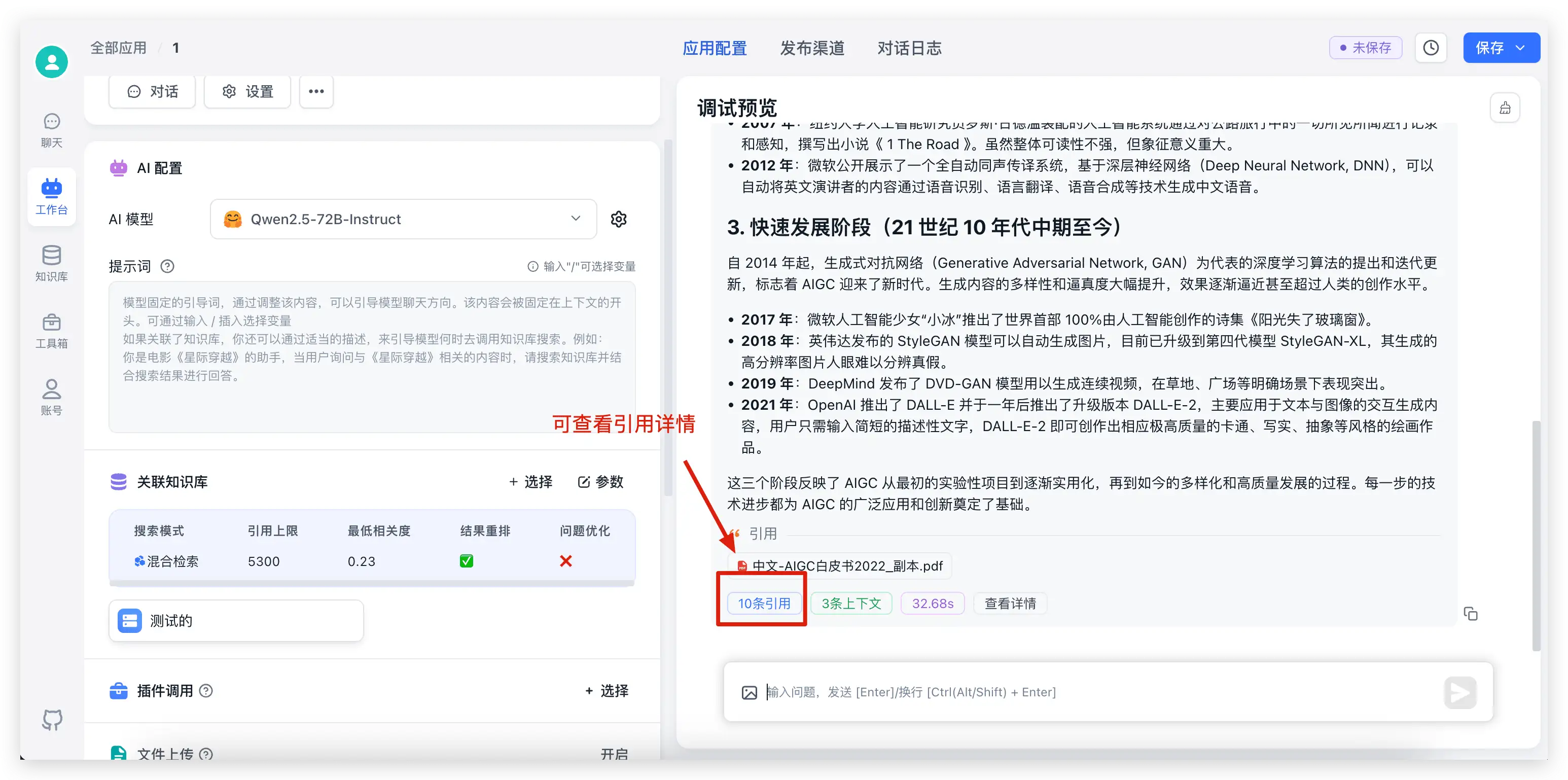
Go back to the app we just created, select the Dataset, adjust the parameters, and start a conversation:
 |  |  |
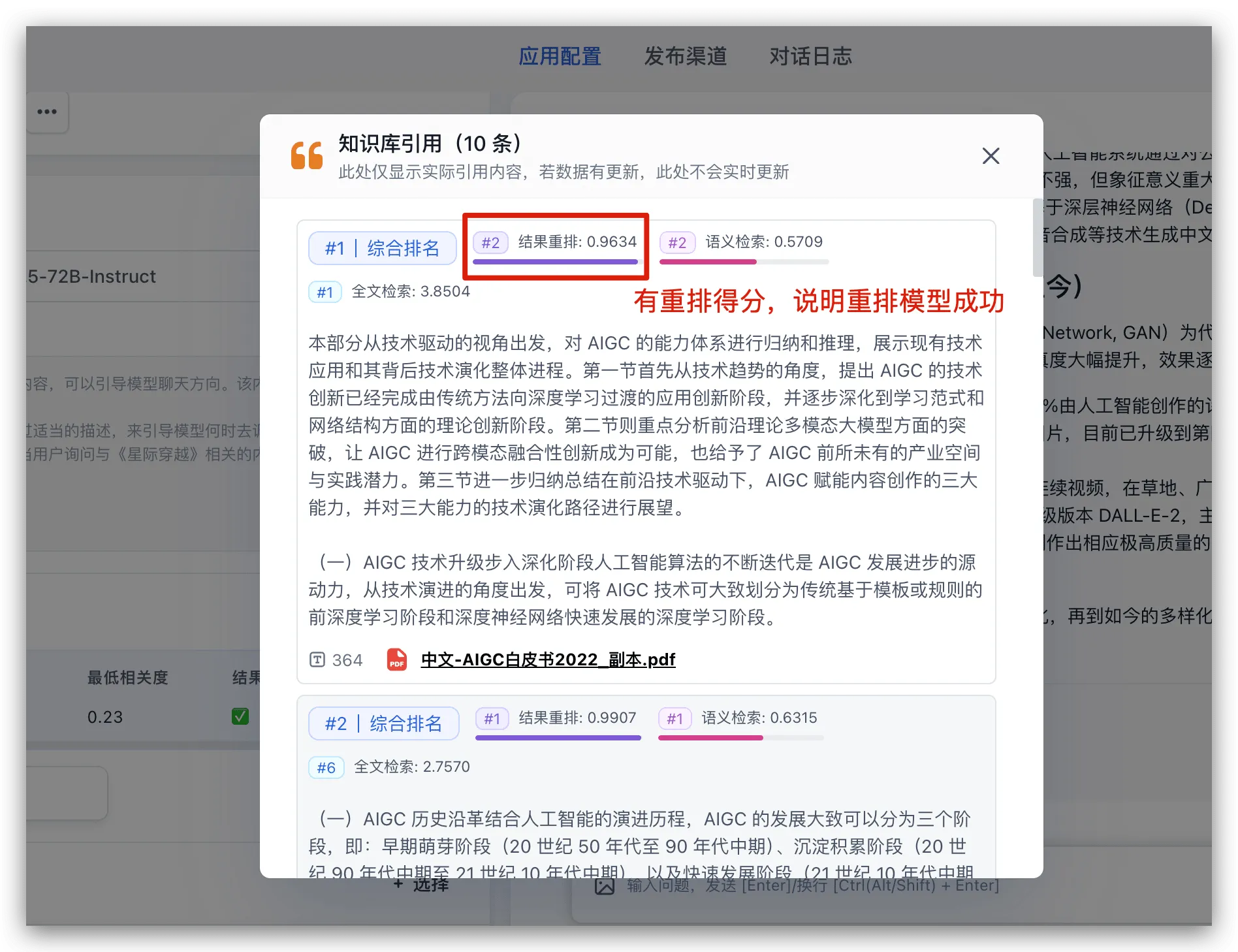
After the conversation, click the citation at the bottom to view citation details, including search and reranking scores:
 |  |
Test Text-to-Speech
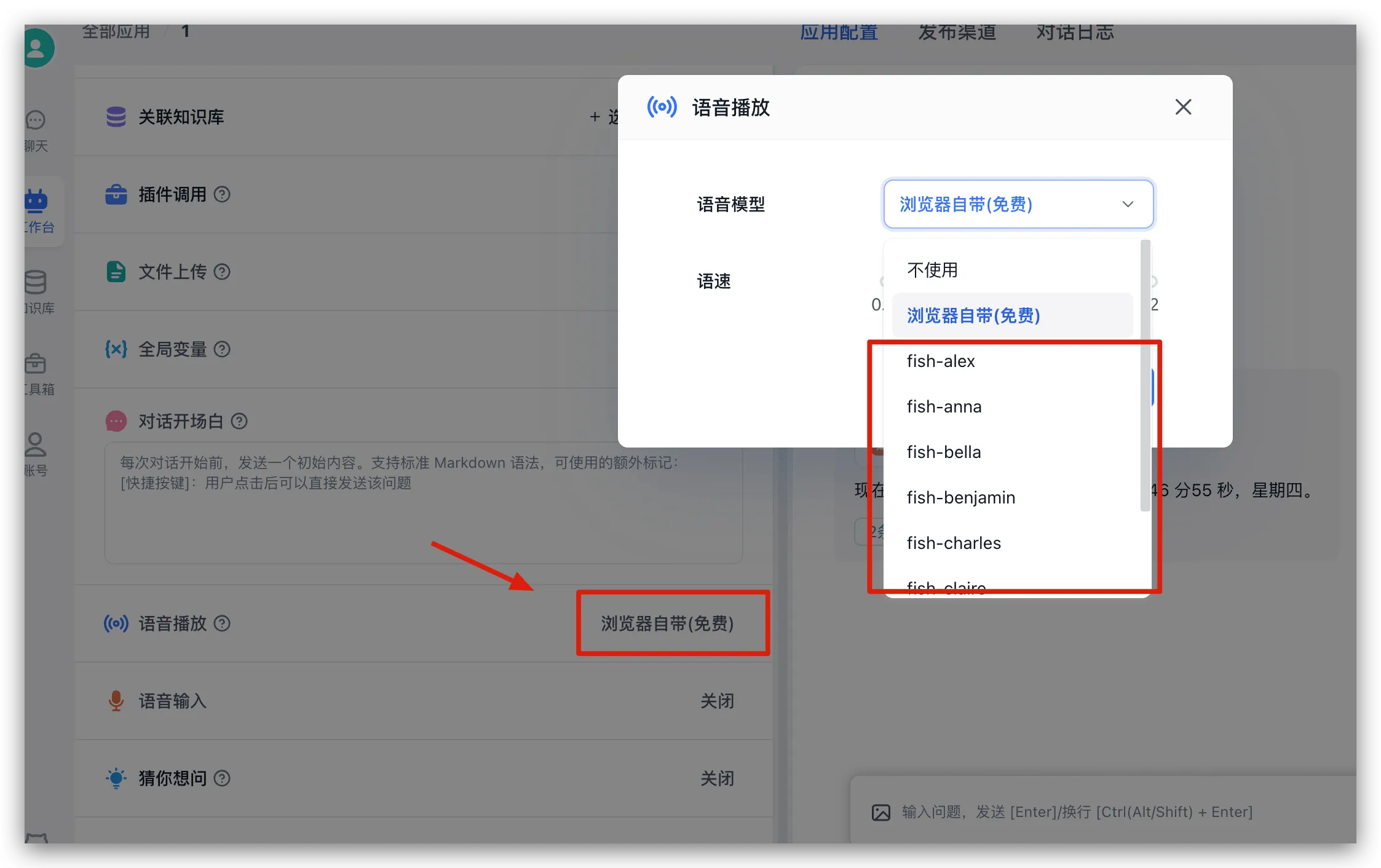
In the same app, find "Voice Playback" in the left sidebar configuration. Click to select a voice model from the popup and preview it:
Test Speech-to-Text
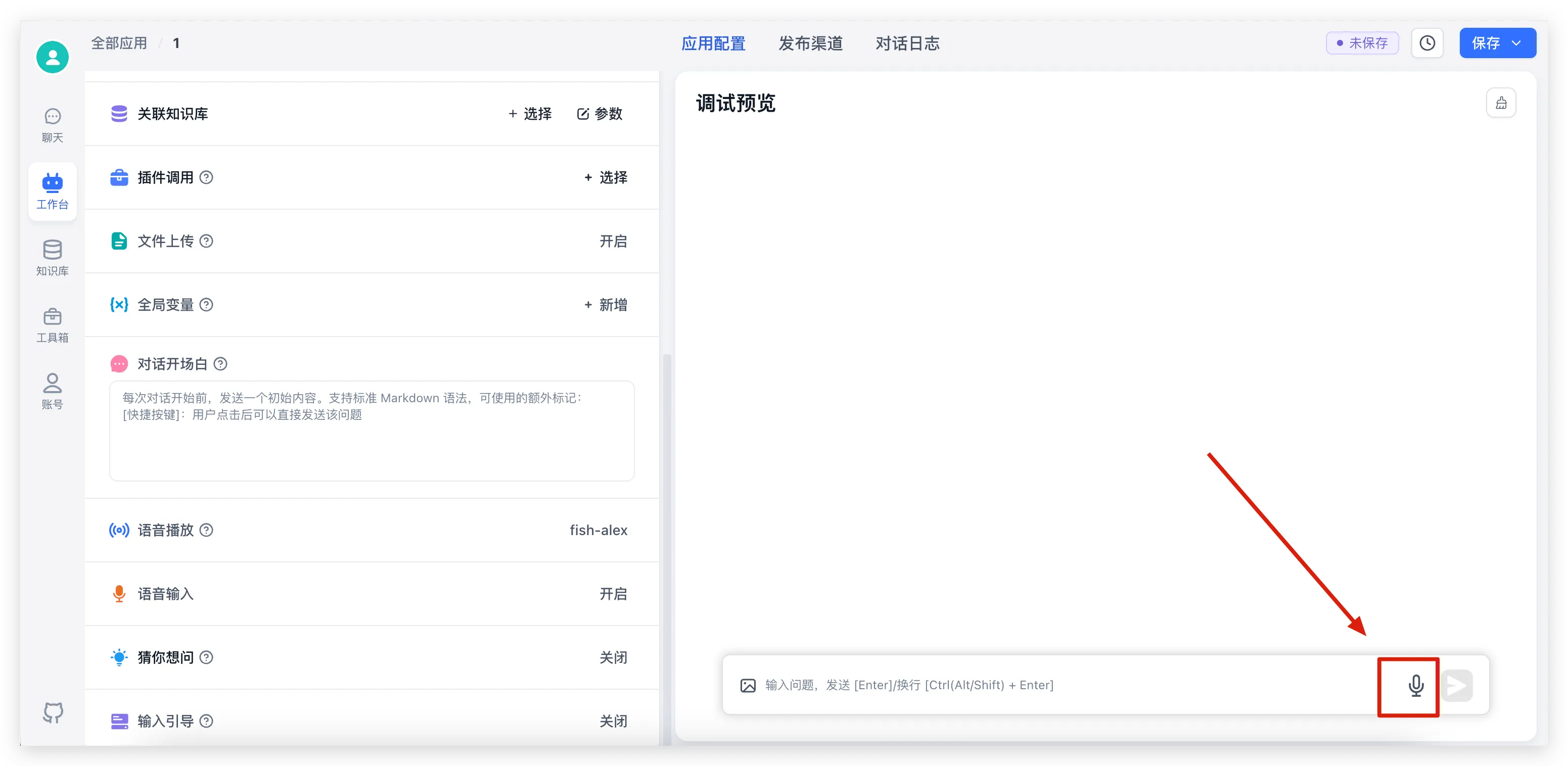
In the same app, find "Voice Input" in the left sidebar configuration. Click to enable voice input from the popup:
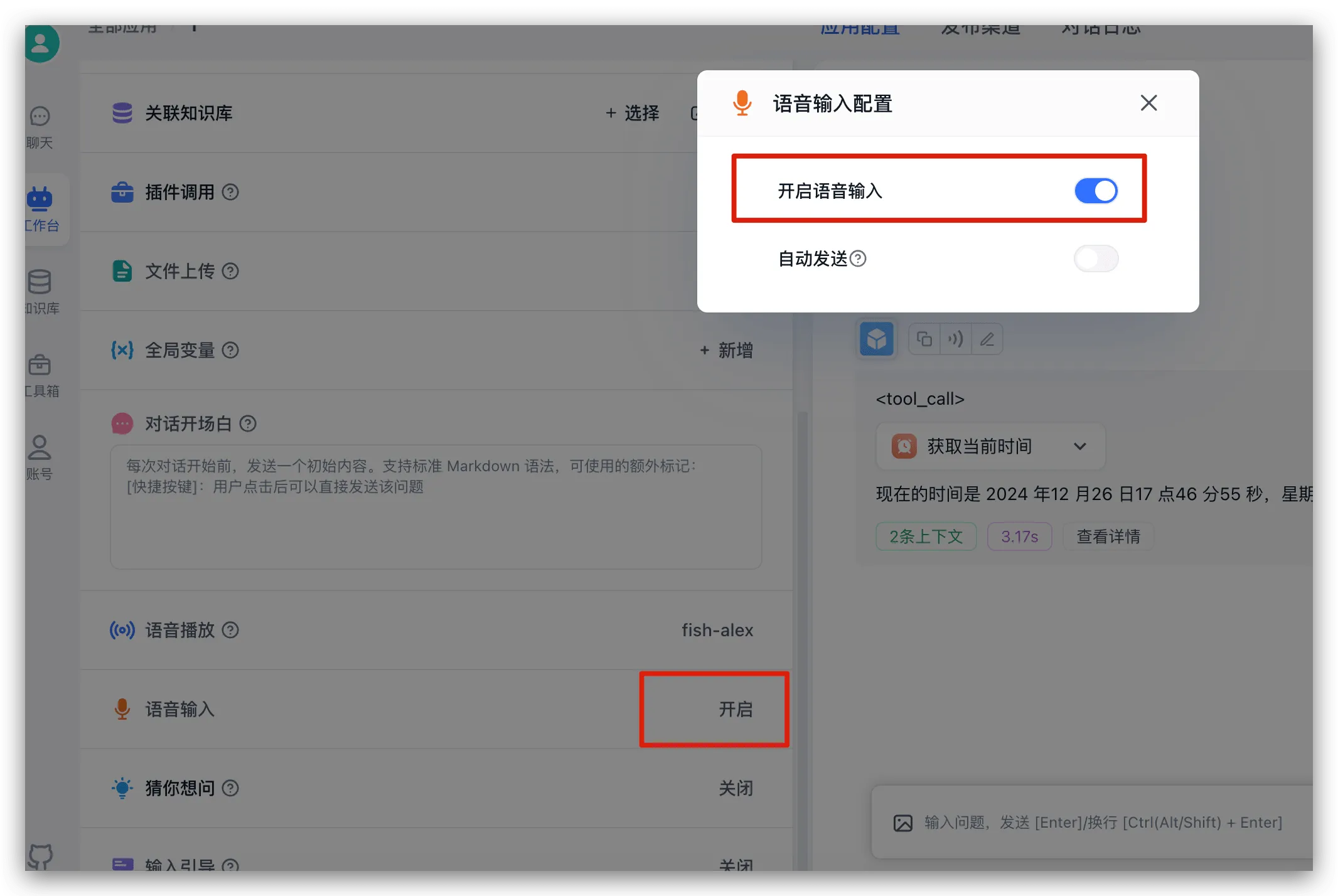
Once enabled, a microphone icon appears in the chat input box. Click it to start voice input:
 |  |
Summary
If you want to quickly try open source models or get started with FastGPT without applying for API keys from multiple providers, SiliconCloud is a great option for a fast start.
If you plan to self-host models and FastGPT in the future, you can use SiliconCloud for initial testing and validation, then proceed with hardware procurement later — reducing POC time and cost.
Last updated