
Integrate SigNoz Service Monitoring
Configure OpenTelemetry tracing and SigNoz observability dashboards for a self-hosted FastGPT deployment.
Introduction
SigNoz is an open-source Application Performance Monitoring (APM) and observability platform that provides comprehensive service monitoring for FastGPT. Built on the OpenTelemetry standard, it collects, processes, and visualizes telemetry data from distributed systems, including tracing, metrics, and logging.
Key Features:
- Distributed Tracing: Track the complete call chain of user requests across FastGPT services
- Performance Monitoring: Monitor key metrics like API response times and throughput
- Error Tracking: Automatically capture and record system exceptions for troubleshooting
- Log Aggregation: Centrally collect and manage application logs with structured query support
- Real-time Alerts: Set alert rules based on metric thresholds to detect anomalies early
Deploy SigNoz
You can use SigNoz cloud service or self-host it. Here's how to quickly deploy SigNoz on Sealos.
- Click the card below to deploy SigNoz with one click.

- Enable external access for SigNoz
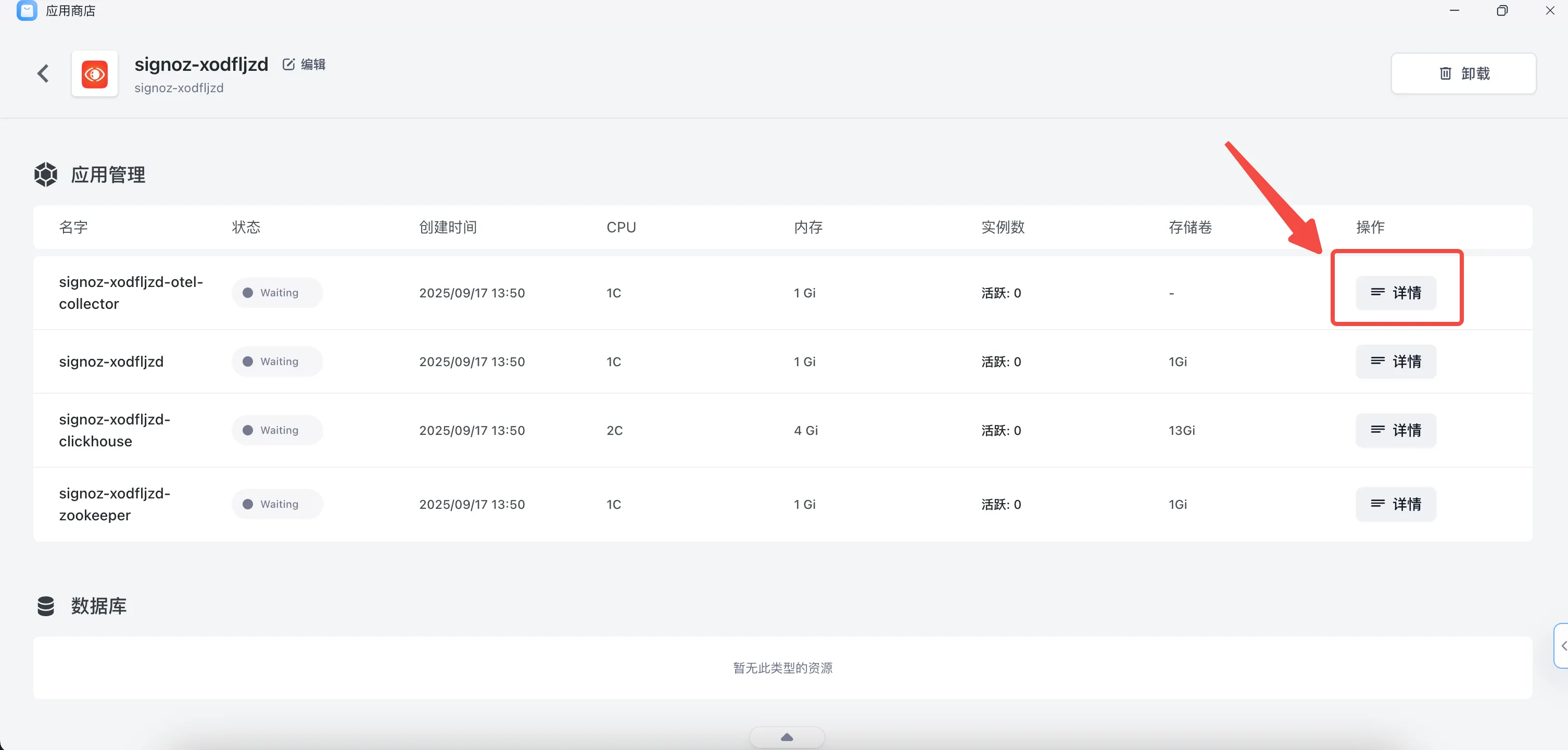
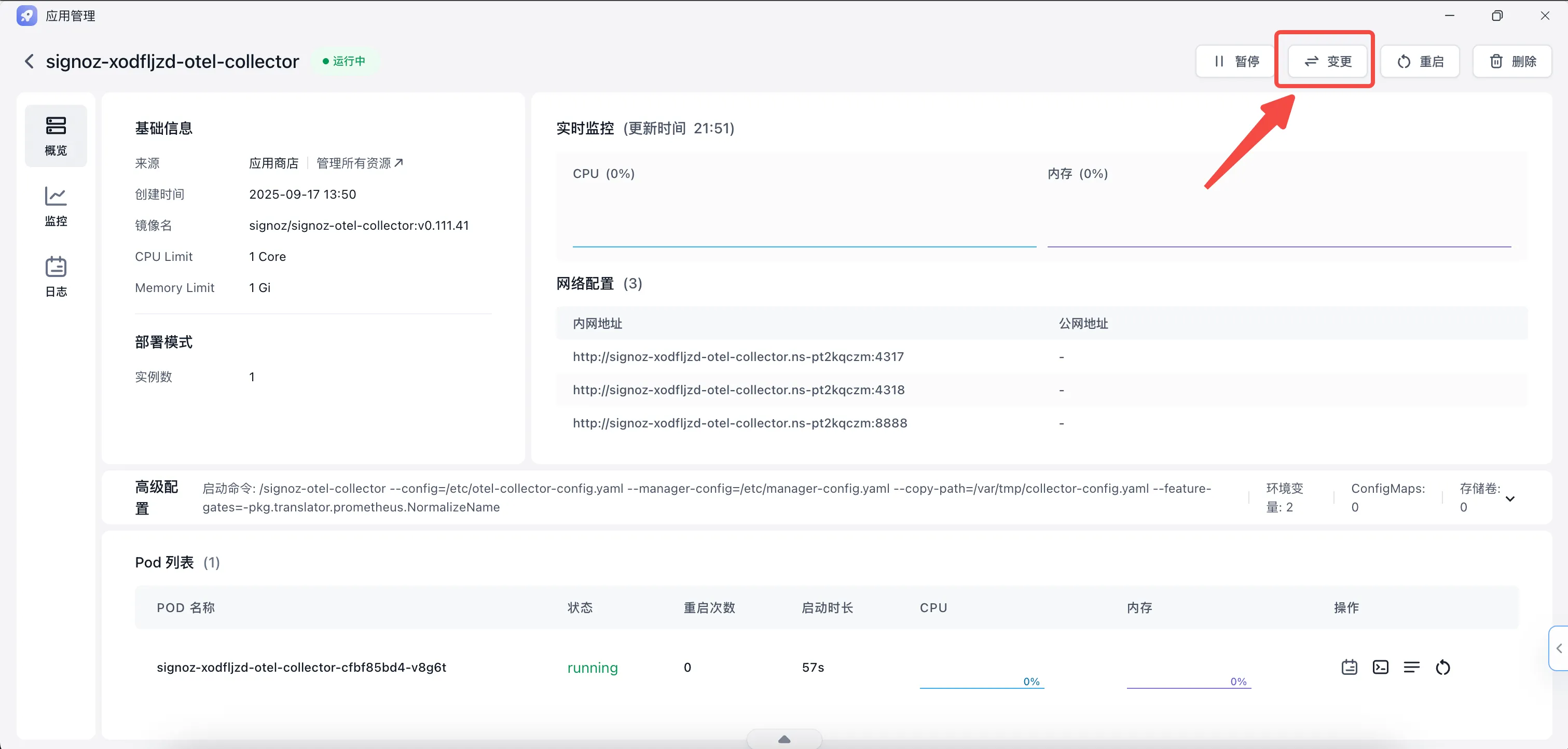
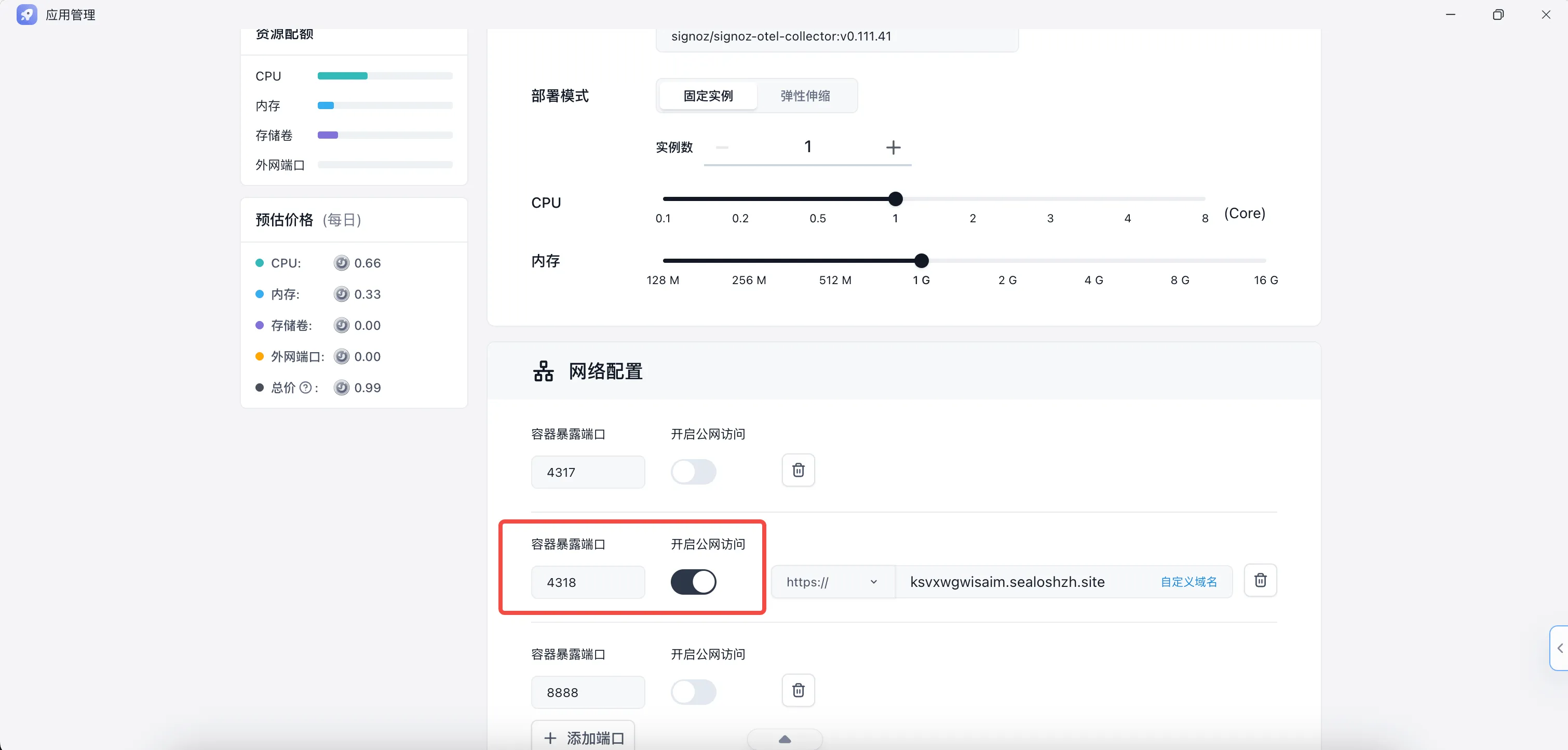
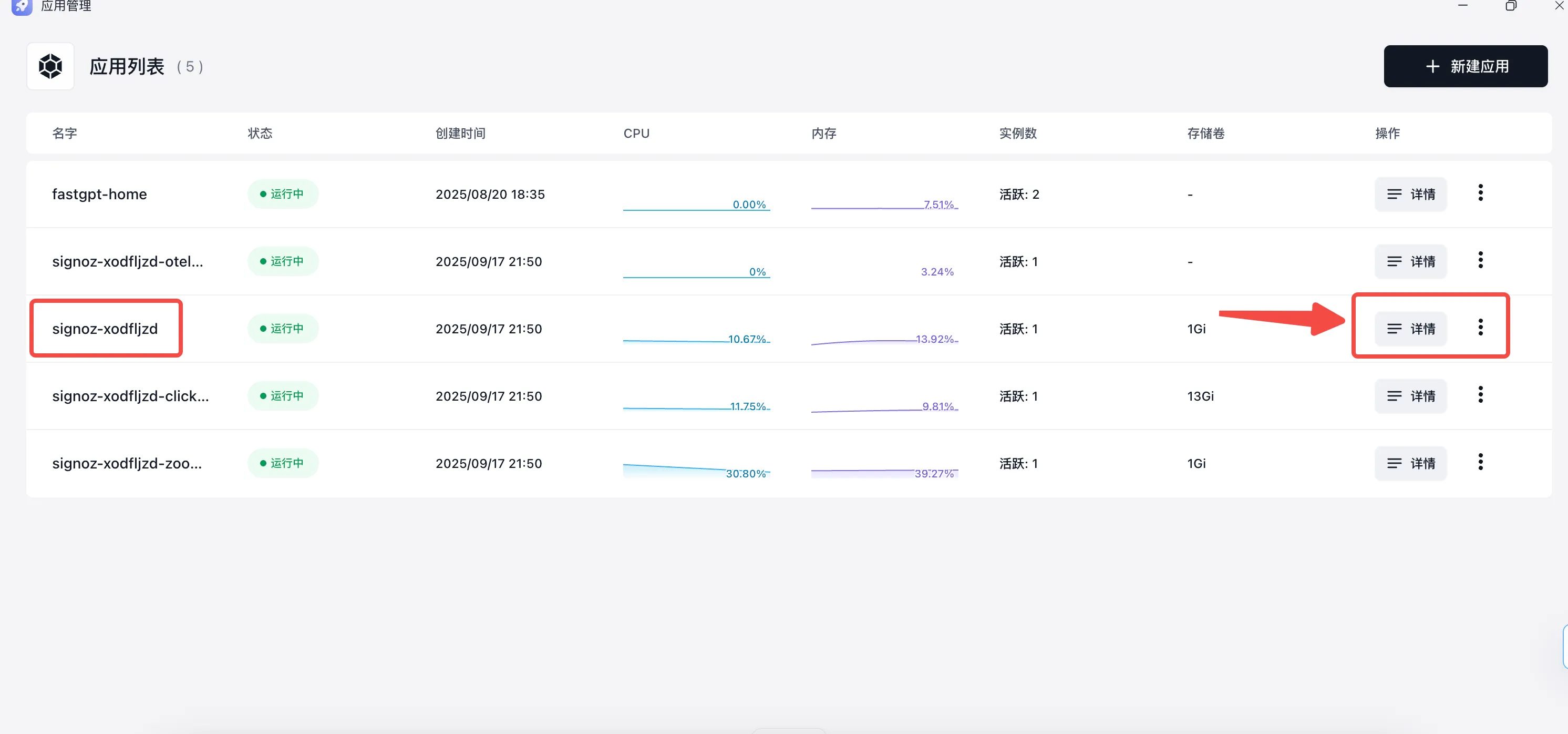
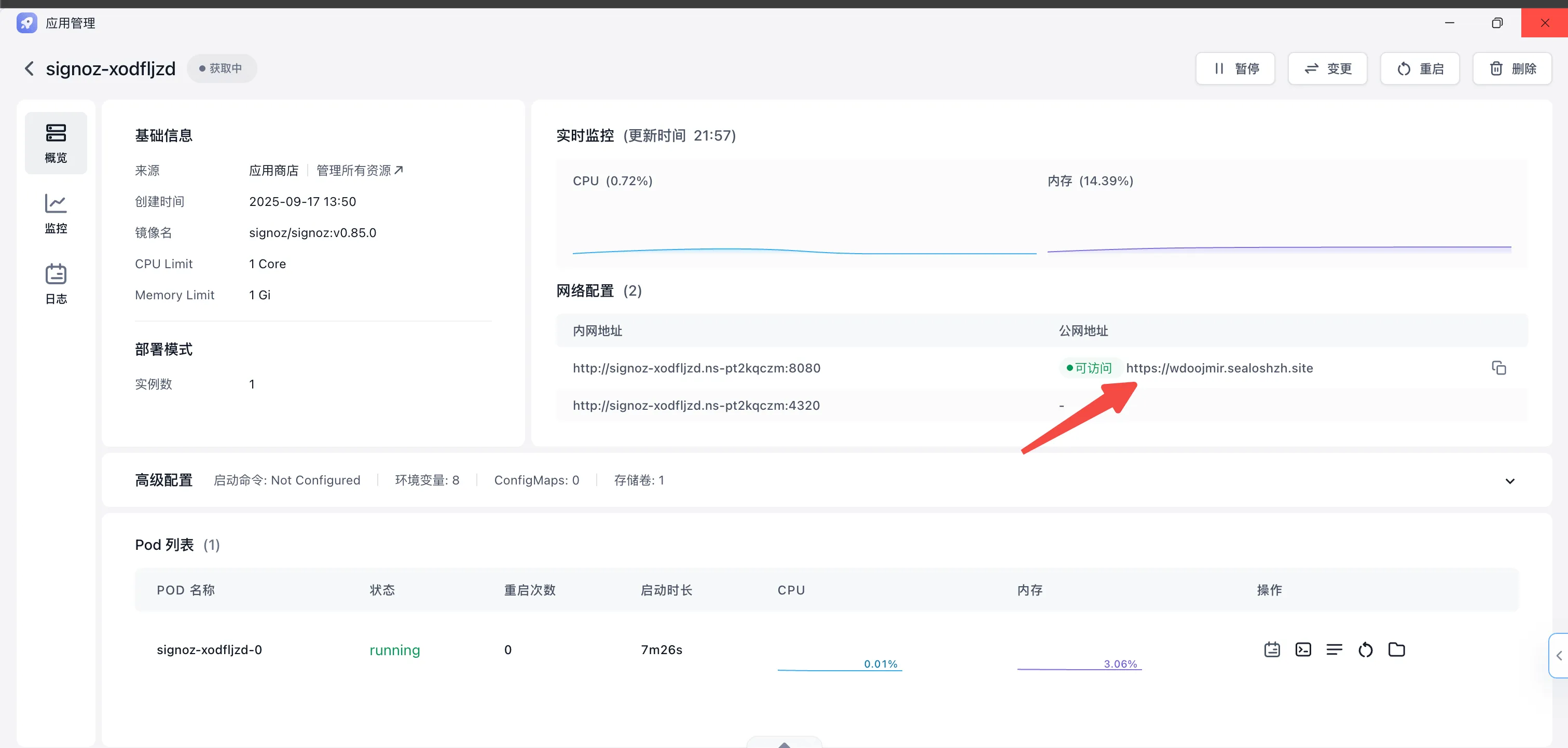
After deployment, click Details on the target service in the app list to open the app details page, click Change in the top right, and enable external access for port 4318 (use the internal address directly when connecting over the internal cluster network).
| Open App Details | Click Change | Enable External Access on 4318 |
|---|---|---|
 |  |  |
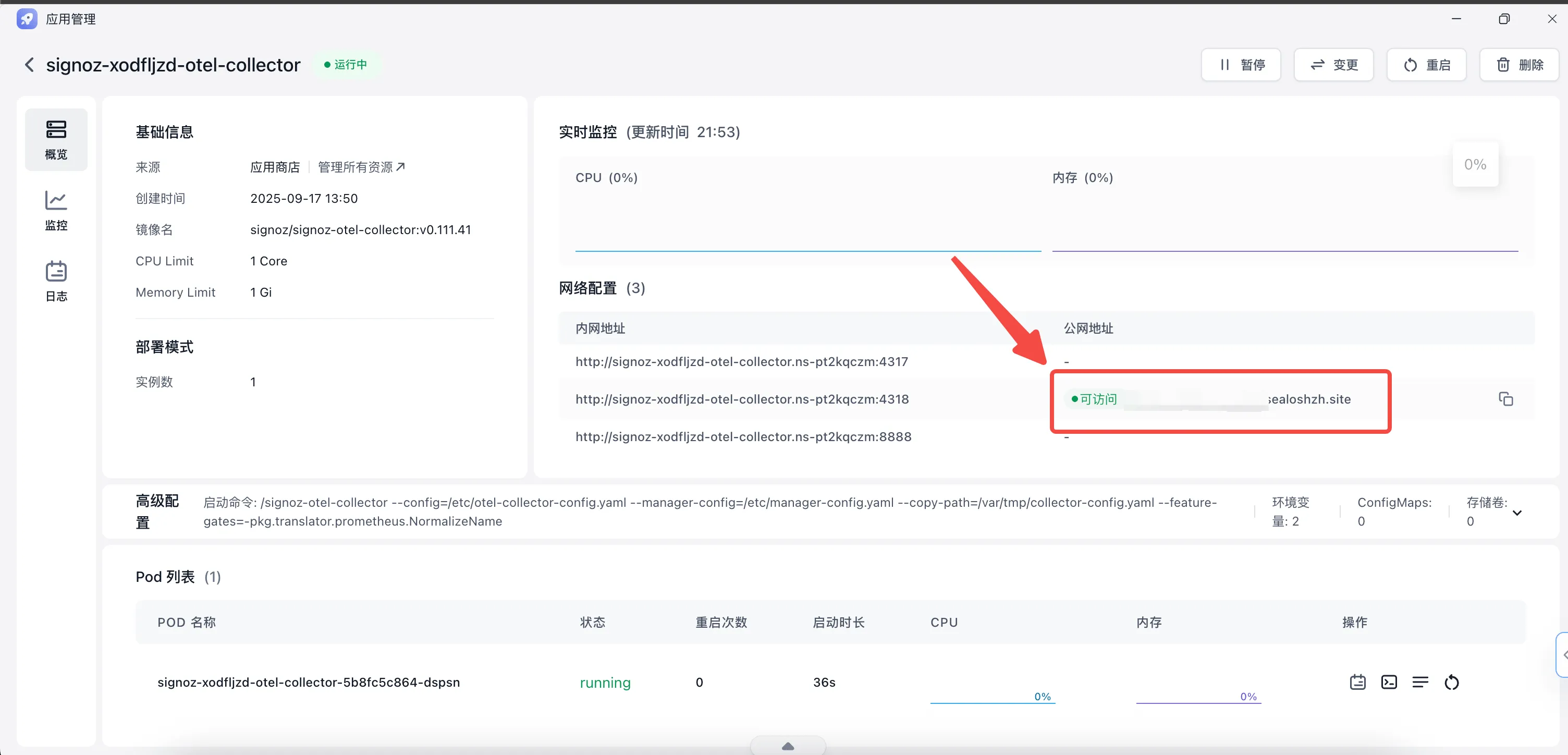
- Get the SigNoz access address
After the change completes, wait for the public address to be ready, copy it, and enter it in FastGPT. If using internal network, copy the internal address for port 4318 directly.
Configure FastGPT
- Update FastGPT environment variables
Log level options: trace | debug | info | warning | error | fatal
Replace <signoz-otlp-endpoint> below with the public or internal SigNoz OTLP address obtained in the previous step (when FastGPT runs in a container, localhost refers to the FastGPT container itself, so use a reachable host or service address):
LOG_ENABLE_CONSOLE=true # Enable console logging
LOG_CONSOLE_LEVEL=debug # Minimum log level for console output
LOG_ENABLE_OTEL=true # Enable OTEL log collection
LOG_OTEL_LEVEL=info # Minimum log level for OTEL collection
LOG_OTEL_SERVICE_NAME=fastgpt-client # Service name passed to the OTLP collector
LOG_OTEL_URL=https://<signoz-otlp-endpoint>/v1/logs # OTLP collector address (keep /v1/logs)
TRACING_ENABLE_OTEL=true # Enable OTEL tracing
TRACING_OTEL_URL=https://<signoz-otlp-endpoint>/v1/traces # Trace export address (keep /v1/traces)
METRICS_ENABLE_OTEL=true # Enable OTEL metrics
METRICS_OTEL_URL=https://<signoz-otlp-endpoint>/v1/metrics # Metrics export address (keep /v1/metrics)
LOG_* exports logs only; traces and metrics require TRACING_* and METRICS_* respectively. In production (NODE_ENV=production), the default trace sample ratio is 0.01; adjust it with TRACING_OTEL_SAMPLE_RATIO (0 to 1).
- Restart FastGPT
Verify the Setup
Go back to the Sealos app management list, open the SigNoz frontend project, and access its public address to open the dashboard.
 |  |
On your first visit, create an account for this SigNoz instance. Account data is stored in its local database.

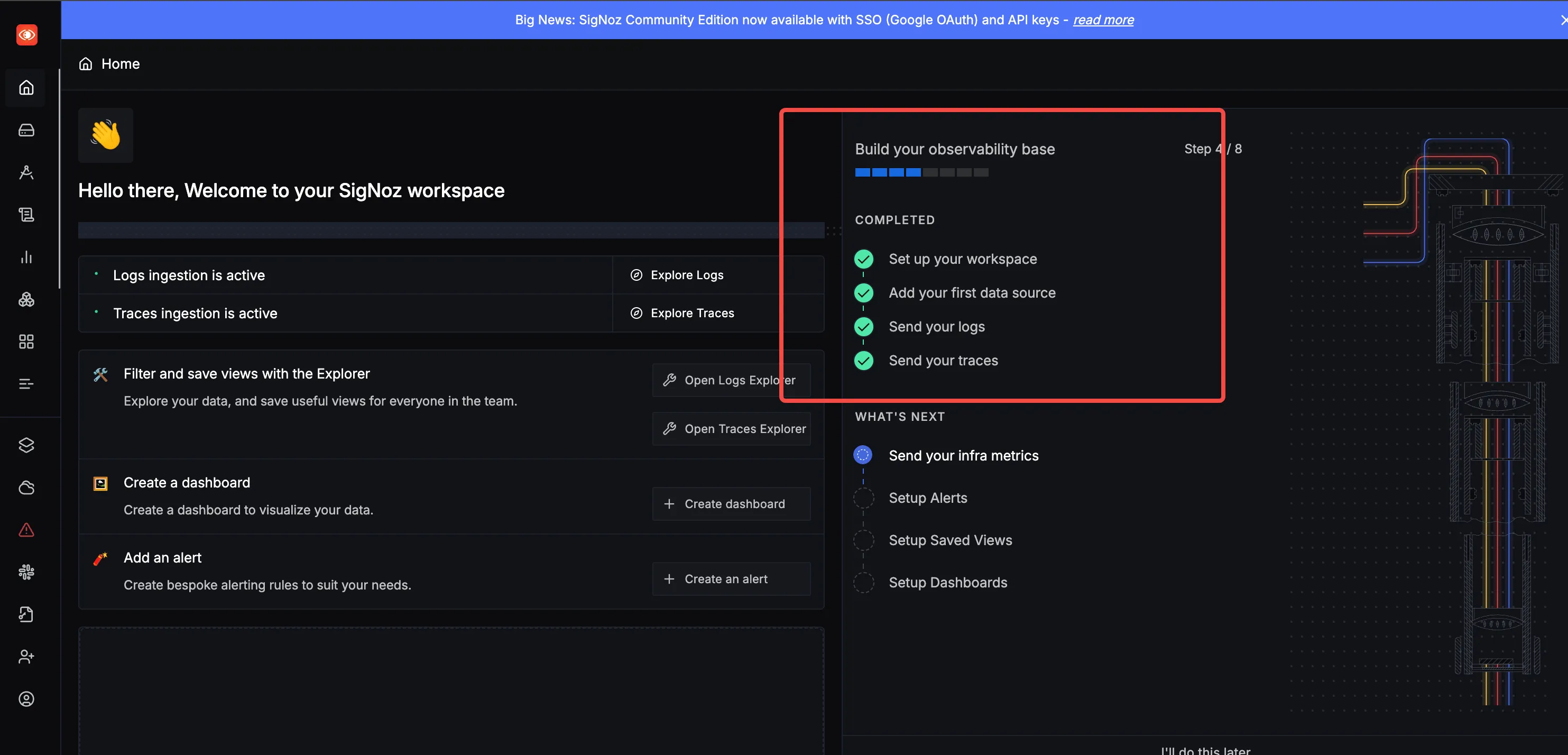
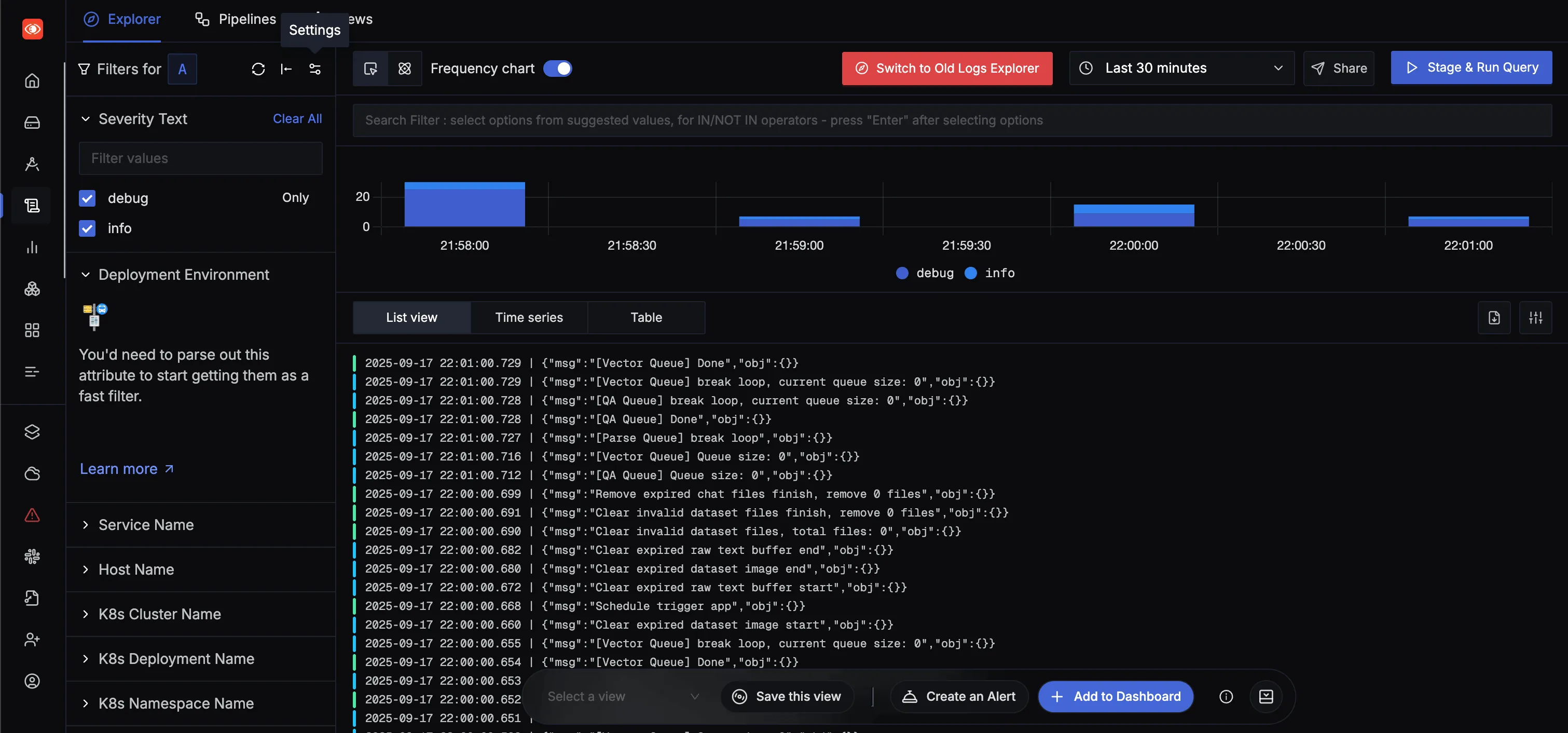
After logging in, if logs is lit up in the COMPLETED steps on the right side, log export works. traces lights up as well once the TRACING_* variables are set and requests have been sampled.
Notes
- Adjust log retention period
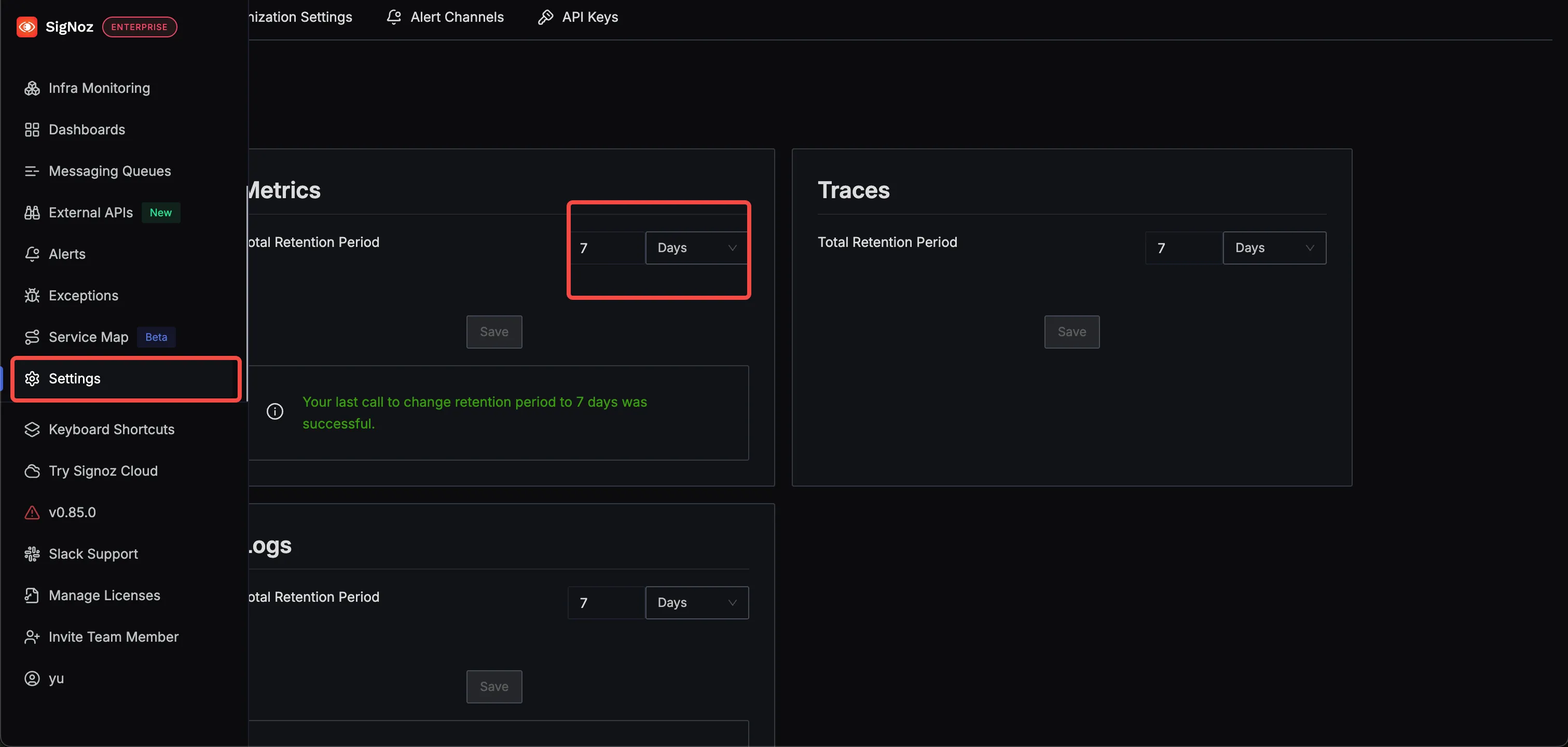
SigNoz is disk-intensive. Keep LOG_OTEL_LEVEL at info or higher and set the log retention period to 7 days. If disk usage reaches capacity and new telemetry data stops appearing, expand the storage volume.
Last updated